


When commercial and industrial customers start asking a solar company not only how much electricity their panels can produce, but also what happens to the electricity they cannot use, it is a sign that the energy market is changing.
For Miale Solar, a Kenyan-Swedish integrated renewable-energy company, this is increasingly becoming part of the conversation around solarisation. Can surplus solar electricity be fed into the national grid? How is it credited? And how should a customer size a system when its electricity demand is expected to change?
These are no longer hypothetical questions.
By June 2025, Kenya had 514.1 MW of installed solar capacity, according to the Energy and Petroleum Regulatory Authority (EPRA). Of this, 210.3 MW was interconnected solar, while 300.5 MW was captive solar — electricity generated primarily for customers’ own use. Captive solar therefore represented almost 60 per cent of Kenya’s installed solar capacity.
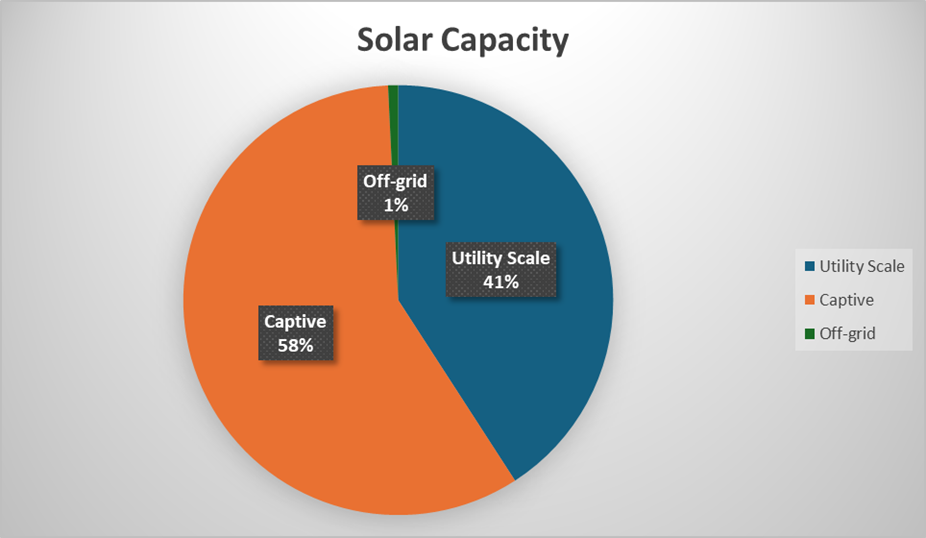
Kenya’s solar transition is increasingly happening behind the meter. And that makes the country’s net-metering framework increasingly important.
A necessary first step
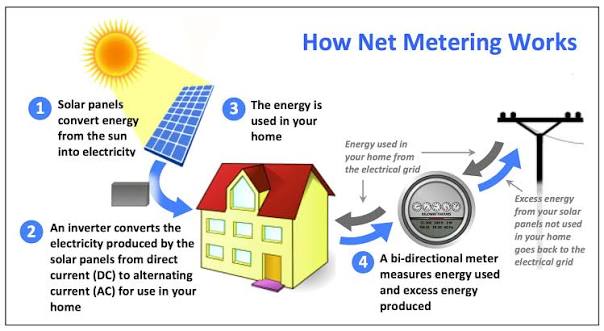
Kenya took a significant step in July 2024 when the Energy (Net-Metering) Regulations, 2024 came into force. The regulations allow consumers with eligible renewable-energy systems to generate electricity for their own consumption and export surplus electricity to the grid.
Domestic customers can have net-metered systems of up to 4 kW on single-phase supply and 10 kW on three-phase supply. For commercial and industrial customers, the capacity cannot exceed 1 MW and is also capped at the customer’s maximum load demand recorded during the preceding 12 months.
The regulations also establish an aggregate national net-metering capacity of 100 MW for the initial five years. The Authority is required to review that threshold when it is reached and, in any event, no later than five years after the regulations commenced.
These are important foundations.
From the industry’s perspective, the immediate priority should not be to portray the framework as a failure, but to make it work.
As Miale Solar CEO Eng. Stephen Adwong’a admits, the 2024 regulations were “a necessary step”, and EPRA deserves credit for putting a formal framework in place. But he also believes that implementation should be accompanied by continuous learning.
“From where we sit, installing systems for hospitals, manufacturers, schools and a growing number of households, the rules are already behind the market they were meant to serve.”
That does not necessarily mean the regulations need to be rewritten immediately. It means Kenya should ensure that the framework can learn from the market it is now creating.
The question of surplus electricity
One of the most important parts of the framework is how it treats electricity exported to the grid. Under the regulations, a consumer receives a credit equivalent to 50 per cent of each unit of electricity exported. The credit can be used to offset electricity supplied by the licensee in subsequent billing periods, but unused credits are forfeited at the end of the licensee’s financial year.
It would be too simplistic to describe this as simply a disadvantage to solar customers. There are legitimate reasons for the regulator to consider the cost of maintaining the distribution network and the value of electricity at different points in the system.
The more useful policy question is whether the current 50 per cent credit appropriately reflects the value that distributed generation can provide.
Miale Solar energy analyst Naomi Njuguna believes this question deserves attention as implementation data begins to emerge.
“The real question is whether that excess energy creates more value when exported or when stored and used later,” she said.
That question has implications beyond the customer’s electricity bill.
Does distributed generation reduce network losses because electricity is generated close to the point of consumption? Can it reduce daytime demand on the grid? Could batteries allow customers to shift solar energy into periods when the system needs it most?
And, conversely, could large volumes of uncontrolled exports create challenges for particular feeders or transformers?
The answer may not be the same everywhere. The policy challenge, therefore, is to find a mechanism that creates value for the customer, Kenya Power and the wider electricity system.
As the market develops, Kenya could use actual data to assess whether the 50 per cent credit remains appropriate, rather than assuming that today’s arrangement must remain unchanged indefinitely.
The grid must remain part of the equation
This is particularly important because distributed solar is not developing in isolation from the electricity grid. A solar system connected to the grid becomes part of that system.
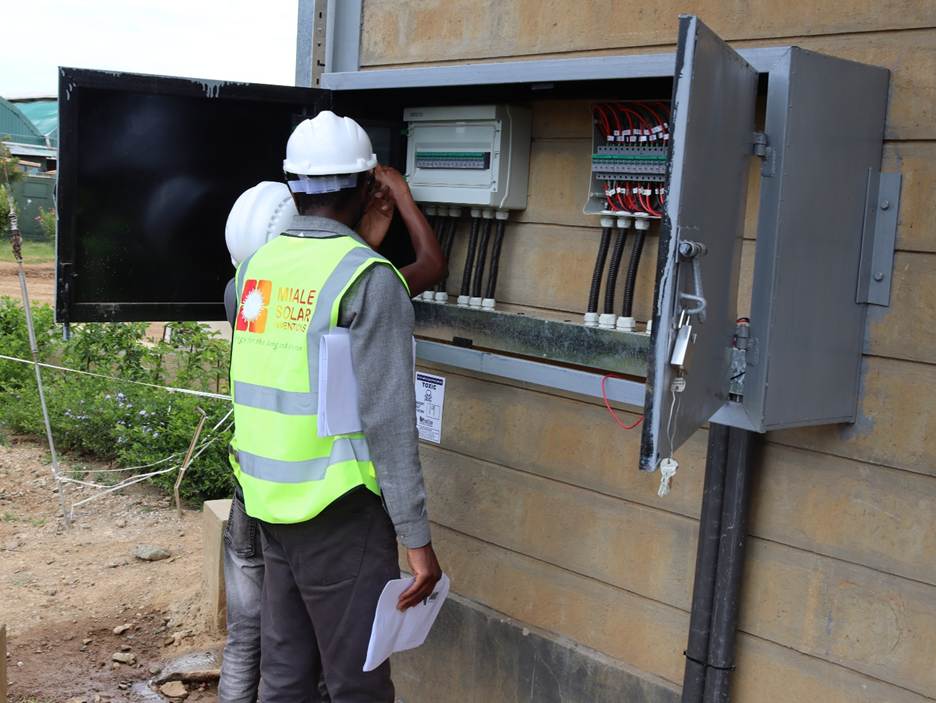
The 2024 regulations recognise this. Licensees are required to consider their electrical infrastructure ratings and network stability requirements when determining the aggregate generation capacity that can be accommodated. Those limits are to be submitted to EPRA and published on the licensee’s website.
For systems above 10 kW, applicants must also submit a feasibility study prepared by an engineer. The study considers the impact of the proposed system on voltage, current, fault levels, power factor and other aspects of the distribution network. The licensee is required to make a determination within 60 days of the application.
These safeguards are important. Kenya should not pursue distributed generation at the expense of grid stability. Instead, the objective should be to make distributed solar and storage develop with the grid rather than away from it.
That distinction will become increasingly important as batteries become cheaper and more common.
A commercial customer with solar and battery storage is potentially more than a consumer reducing its electricity purchases. With the right technical and commercial framework, such assets could eventually provide useful services to the electricity system, including peak management, flexibility and potentially voltage and frequency support.
The policy opportunity is therefore much larger than net metering alone.
The household limits may not be the problem — yet
The regulations limit domestic net-metered systems to 4 kW for single-phase connections and 10 kW for three-phase connections. It may be tempting to immediately describe these limits as restrictive. But industry experience suggests a more measured approach.
Most households currently adopting solar are not necessarily seeking complete independence from the grid. Many are combining backup capability with solar generation to offset daytime electricity consumption.
Eng. Adwong’a therefore considers the current limits broadly workable for today’s market. The longer-term question is what happens as household electricity demand changes.
Electric vehicles, home batteries, electric cooking, water heating, pumping and other technologies could significantly change household load profiles.
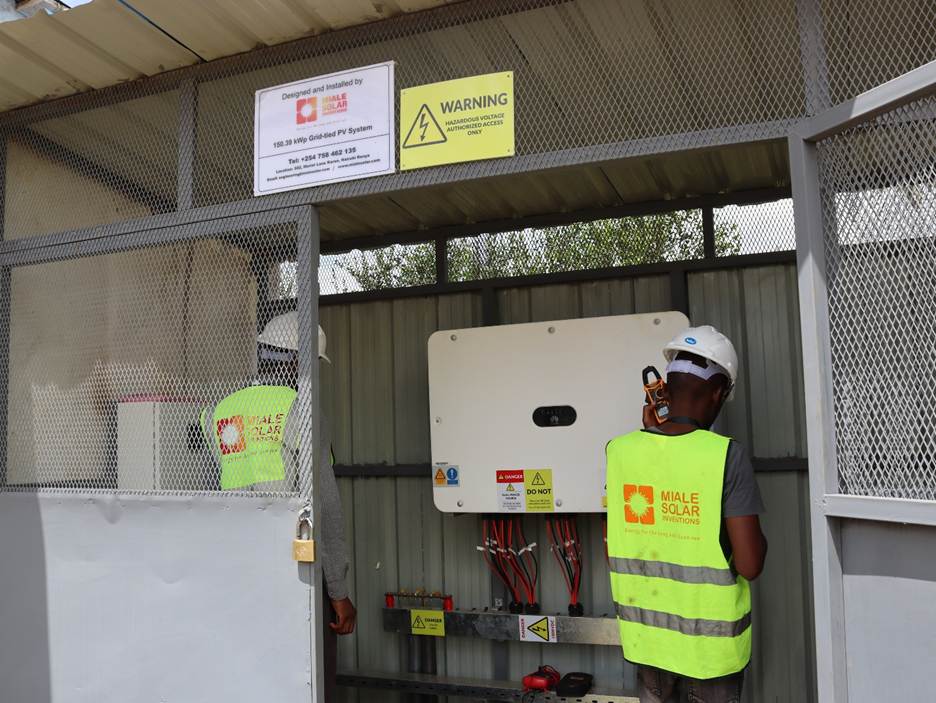
“Where I’d see a future problem, not a current one, is EV charging and home battery adoption,” Adwong’a says. “Those caps were set for today’s household load profile, and that profile is going to move.”
Eng. Mercy Jelimo, a technical sales engineer at Miale Solar, similarly believes that the framework should eventually become more responsive to actual demand and network capacity.
“While 4 kilowatts for single phase and 10 kilowatts for a three-phase make sense from the perspective of managing the grid, we have to understand that household electricity load profiles are changing.”
Her argument is not for unlimited household generation. Rather, she suggests that Kenya could eventually consider a more flexible approach based on the customer’s demand, the capacity of the connection and the hosting capacity of the local distribution network.
That would allow regulation to evolve with technology without compromising network safety.
The C&I question is more immediate
For commercial and industrial customers, the issue is somewhat different. The regulations provide that net-metered C&I systems cannot exceed 1 MW and cannot exceed the customer’s maximum load demand in the 12 months preceding the application.
There is a clear logic to this requirement.
Historical demand provides the utility with evidence of how much electricity a customer actually consumes. But businesses do not always remain the same size for 12 months.
A manufacturer may be installing a new production line. A hospital may be expanding. A school may be adding new facilities. A business may be introducing an additional shift.
In such cases, the customer’s historical demand may not fully represent its future electricity requirements. This is where the industry sees an opportunity for the framework to become more forward-looking.
“We regularly size systems for where a client is going, not just where they’ve been, and the regulation doesn’t have a mechanism for that,” says Adwong’a.
One possible solution would be to allow credible, documented future demand to be considered alongside historical consumption.
A customer planning an expansion could provide evidence of the additional load it expects to introduce. The distribution utility could then assess the proposed solar system against both the existing demand and the technically credible future demand.
This would not remove the grid’s ability to assess each project. It would simply recognise that solarisation and business expansion can happen at the same time.
The bigger question: who finances and owns the system?
There is another issue that could become increasingly important as Kenya’s institutional solar market matures. The regulations are built around the relationship between the consumer and the generation system. But the customer does not necessarily have to own the solar asset.
“For many schools, hospitals, manufacturers and other institutions, the biggest obstacle to solarisation is not whether solar makes economic sense. It is the upfront capital required to purchase the system,” says Eng. Adwonga’.
This is why the market is developing models such as Power Purchase Agreements, leasing, lease-to-own and Energy-as-a-Service. Under these arrangements, a solar company or financier can finance and own the system while the customer pays for the energy service over time.
Miale Solar is among companies exploring such models in the institutional and commercial market. For distributed solar to scale beyond customers with substantial capital available upfront, policymakers will increasingly need to consider how third-party ownership and financed systems fit within the regulatory framework.
The objective should be simple: the regulatory framework should not unintentionally favour only customers who can afford to purchase their energy infrastructure outright.
What does the 100 MW ceiling tell us?
The 100 MW national threshold also deserves a closer look, not necessarily because it is wrong, but because the reason for having a ceiling should remain clear.
The regulations already provide for a review when the threshold is reached and, in any case, within five years of commencement. They also require licensees to determine the capacity their networks can accommodate based on infrastructure ratings and stability requirements.
This provides an opportunity for evidence-based policy. Rather than asking whether the ceiling should simply be removed, policymakers should capture how actual implementation data tell us about the appropriate level, how many systems have been connected, how much electricity are they exporting or even where are those systems located?
Other questions policymakers could look at include what impact are they having on different feeders, how are customers responding to the 50 per cent credit, as well as how much distributed generation can the network safely accommodate?
These are the questions that should inform the next review.
Pakistan offers a warning — and an opportunity
Kenya can also learn from what is happening in other emerging electricity markets.
Pakistan provides an instructive example of the difficulty of balancing rapidly growing distributed solar with the economics of the electricity grid. Its regulator has been dealing with the implications of increasing distributed generation and its effect on electricity demand and power-system economics.
In 2025, Pakistan’s National Electric Power Regulatory Authority (NEPRA) reported issuing 2,202 distributed-generation net-metering licences in the fourth quarter alone, while also moving toward a new Prosumer regulatory framework.
The experience illustrates a broader challenge.
When electricity prices are high, customers have a strong incentive to reduce grid purchases by investing in solar and batteries. As more customers reduce their purchases, utilities can face greater pressure to recover the fixed costs of maintaining the electricity system from a smaller volume of electricity sales.
That can create a difficult cycle.
Kenya’s Ministry of Energy and Petroleum has an opportunity to avoid allowing distributed energy and the grid to develop as competing systems. The objective should instead be to design a market in which solar, batteries and the grid reinforce one another.
A framework that learns
Kenya does not necessarily need a wholesale redraft of its 2024 regulations. It needs a framework that can evolve.
The immediate priority should be successful implementation: getting net metering operational, building confidence among customers and investors, and demonstrating that distributed generation can create value for consumers, Kenya Power and the wider electricity system.
At the same time, the country should establish a transparent mechanism for learning from implementation. That could include regular publication of data on connections, installed capacity, exports, imports, network impacts and the performance of different customer categories.
According to Miale Solar, it could include periodic review of the 100 MW threshold and the 50 per cent export credit. It could allow documented future C&I load growth to be considered where there is a credible basis for the additional demand. It could also clarify how third-party-owned and financed systems fit within the framework.
And, as battery storage grows, it could begin developing mechanisms through which distributed batteries can provide services to the grid.
This would position Kenya for the next phase of its energy transition. The country has already demonstrated that distributed solar has a market. By June 2025, captive solar capacity had reached 300.5 MW, more than the 210.3 MW of interconnected solar capacity.
The task now is not to choose between distributed solar and the grid. It is to make them work together. For Miale Solar and other companies working directly with customers, the market is already revealing where the next questions will come from.
Eng. Adwong’a feels that 2024 regulations could not have answered a number of questions completely, including how much solar should a growing factory install? Others questions include what happens to the electricity a hospital does not consume? How should a household’s solar system evolve as it begins charging an electric vehicle? Can a battery installed behind a commercial meter eventually become an asset that also supports the grid? And can a school or hospital access solar through a financed model without having to own the asset outright?
Good policy does not have to anticipate every development. But good policy must be capable of learning from them, he concludes.
Kenya’s net-metering regulations were an important first step. The next step should be to make them work: measure what happens, learn from the evidence and progressively refine the framework. The goal should not be a solar market that grows away from the grid. It should be a distributed-energy market that grows with it.